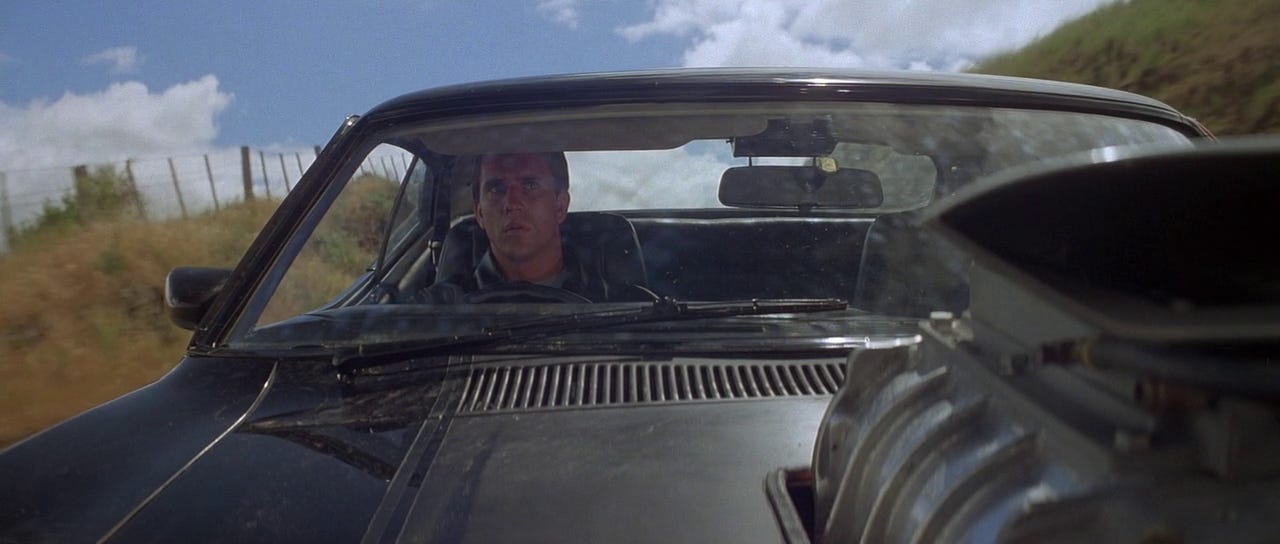
Quick Review: Despite its more kitschy elements and slow start, Mad Max delivers on an adrenaline-fueled game of cat and mouse with fast car chases, heart & soul, and surprisingly beautiful cinematography. 4/5 Stars
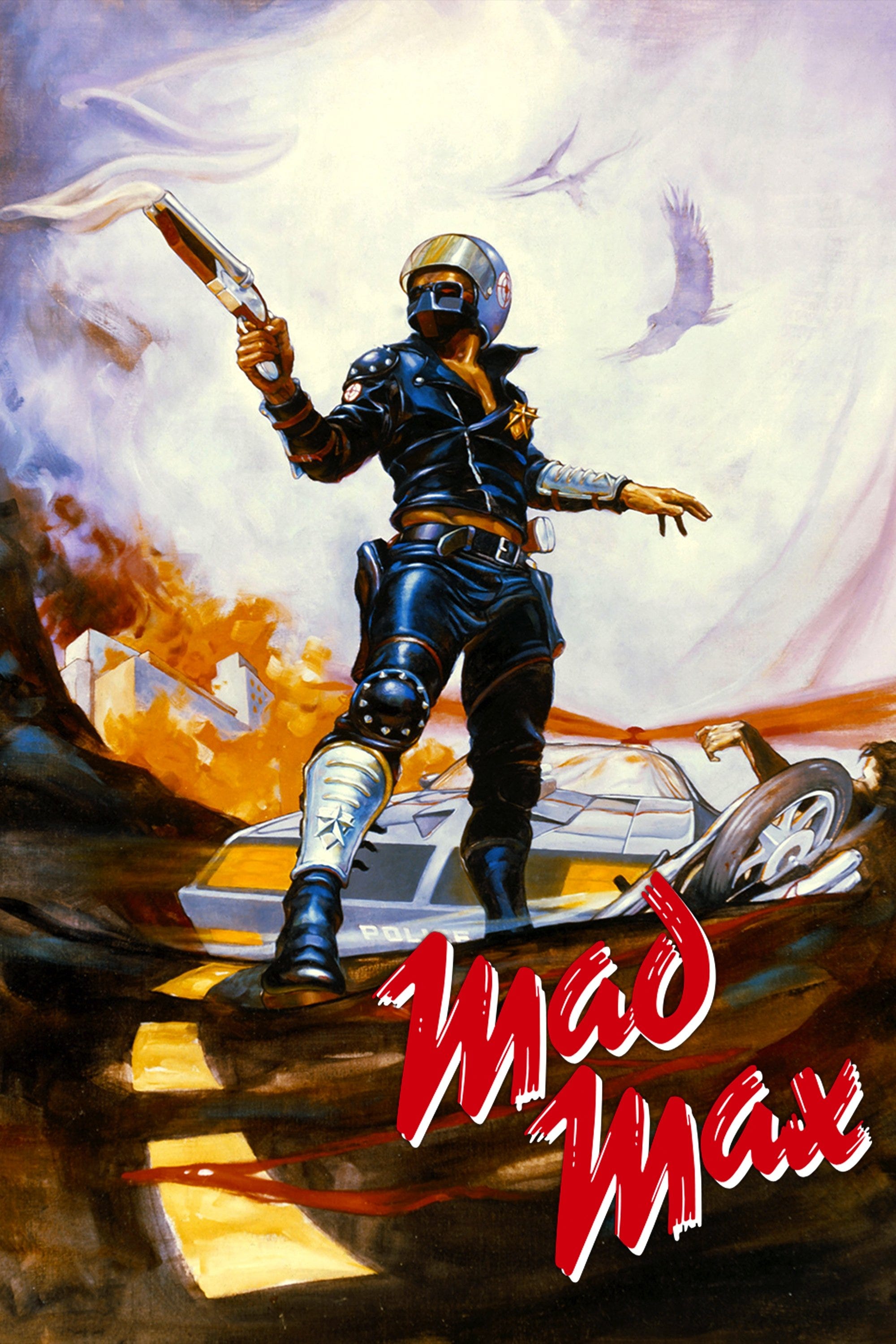
[The following post is an expanded version of an old Letterboxd Review]
Main Review
Mad Max occupies a very interesting space that very few post-apocalyptic films tend to reside. The apocalypse is recent enough that pieces of society still linger, but they are fragile. Instead of watching society be rebuilt, like in The Book of Eli (which warrants its own review!), we see its slow collapse. Unlike films such as Waterworld, which imagine futures long after the fall, or movies like A Quiet Place: Day One, which dramatize the immediate crisis, Mad Max lingers in the uneasy middle ground. It shows us a world on the edge, where the rules and structures of civilization are eroding before our eyes, and where each day pushes humanity one step closer to anarchy.
For most of the film, Max serves as a bulwark against chaos, a living reminder of what civility and order can still provide. He has a wife and child, a home, the luxury of leisure; scenes of vacations and ice cream that, while mundane, root him in a recognizable world of stability. This section of the film is often criticized for its pacing, but I think it’s essential: it shows us the fragile remnants of civilization being slowly worn down by the forces of decay. These everyday moments highlight what is at stake, what is being lost. Mad Max isn’t simply a low-budget, post-apocalyptic action film—it is an 'Apocalyptic' movie in the truest sense of the word.

In the original Greek, apocalypse (ἀποκαλύπτω) means to reveal or uncover. Mad Max is apocalyptic not merely because it depicts societal collapse, but because it unveils the forces that erode civilization from within. Like the warnings in Revelation, where the Beast and other forces of chaos systematically corrupt and destroy the faithful, the film shows how suffering and lawlessness slowly turn people away from duty and order, picking them off one by one until no one is left to resist. Max, once a defender of society, mirrors this process: driven by grief and rage after his family’s murder, he abandons the very principles he once upheld, becoming himself an agent of destruction. His turn underscores the film’s apocalyptic insight: just as biblical texts reveal the hidden forces behind human sin and societal decay, Mad Max exposes how easily civilization unravels when its stewards surrender to chaos.
Yet apocalyptic narratives, both biblical and cinematic, do not exist solely to depict destruction. Revelation, for example, unveils not only chaos and corruption but also God’s ultimate sovereignty and the promise of restoration for those who remain faithful. Similarly, Mad Max, while showing civilization’s unraveling and the seductive power of vengeance, invites reflection on the fragile but essential bonds that hold society together; duty, care, and moral courage. In exposing the forces that threaten these bonds, the film implicitly asks whether there is still a way to resist chaos and restore order, reminding us that even in the midst of decay, hope and redemption remain possible. In the end, Max is able to put a stop to Toecutter and his gang, avenging his fallen bride.
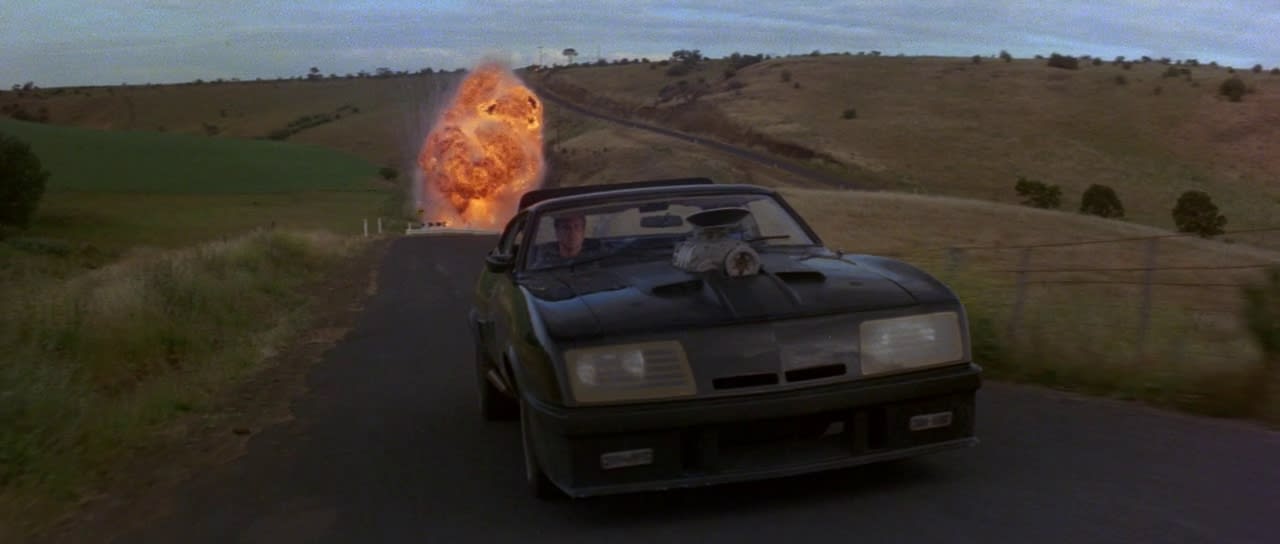
Though the pacing kind of falters and the micro-budget pokes through, The film’s relentless suspense, and the brief lulls shattered by bursts of violence create a gripping, unforgettable experience. George Miller’s confident directing, pairs with Brian May’s aggressive score, sharp editing, and the roar of a V8 engine, to create an essential piece of lowfi action.
I plan to revisit Mad Max in the future, discussing the Christ figures throughout the series.